

The Electrocortical Activity of Athletes During Rubik’s Cube Assembly

Speed cubing (rapid Rubik’s cube solving) requires the integration of complex cognitive and motor processes, including visuospatial reasoning, working memory, and planning. Despite its relevance, the electrocortical mechanisms underlying this activity remain poorly understood. The aim of this study was to characterize electrocortical activity in speedcubers during the planning and execution phases of cube solving, as well as to identify correlations between brain activity and measures of individual cognitive abilities.
The sample comprised 13 experienced speedcubers (mean age 23 ± 5 years; experience 5.8 ± 2 years). Participants performed Rubik’s cube assembly under competition-simulating conditions (15 seconds of activity planning, followed by cube solving), as well as cognitive tasks assessing planning abilities (Tower of London), visuospatial abilities (JLAP), spatial memory (Memory Match), and fine motor coordination (cube manipulation). EEG recording was conducted using a 32-channel system at a sampling frequency of 500 Hz. The analysis included assessment of spectral power in the delta, theta, alpha, and beta frequency bands across four cortical regions (frontal, occipital, parietal, and temporal lobes).
The principal findings revealed significant correlations between electrocortical activity during activity planning and cube solving with all isolated cognitive tasks, predominantly in the frontal lobe (delta and beta bands). EEG power spectra during planning and cube assembly were similar across all frequency bands (p > 0.05), indicating comparable neural activation in both conditions. Correlation analysis revealed a significant relationship between EEG power in the delta band of the occipital region and cube-solving efficiency (r = 0.71; p = 0.009), confirming the role of visuomotor integration. Performance on the JLAP and Tower of London tests correlated with activity in the delta band of the temporal and frontal regions, respectively.
The results demonstrate a complex neural signature in the frontal, parietal, temporal, and occipital regions associated with both Rubik’s cube assembly and individual cognitive functions. Speed cubing activates distributed neural networks engaging multiple cortical regions. The similarity of electrocortical activity during planning and direct execution of assembly indicates complete transfer of the formulated strategy to motor implementation, with no additional adaptation required. Moderate correlations between EEG activity and task performance demonstrate the potential of electroencephalography for assessing cognitive learning in the context of complex visuomotor skills.
Original article reference:
Zarei, A.A., Frederiksen, C.R., Jensen, M.B. et al. The electrocortical activity of elite Rubik’s cube athletes while solving the cube. Exp Brain Res 243, 155 (2025).
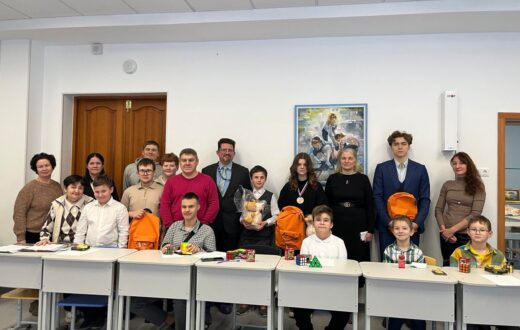
It should be noted that, with the support of the Hungarian Consulate in Ekaterinburg, the Ural Institute of Humanities of Ural Federal University is actively developing an innovative project dedicated to studying the Rubik’s cube as a contemporary pedagogical technology. Recognizing the substantial potential of this tool in developing students’ cognitive skills, the Ural Institute of Humanities considers this research a strategically important direction that opens new horizons for enhancing educational methodologies and improving learning effectiveness.