

The Rubik’s Cube as a Pedagogical Technology: Cognitive and Compensatory Aspects
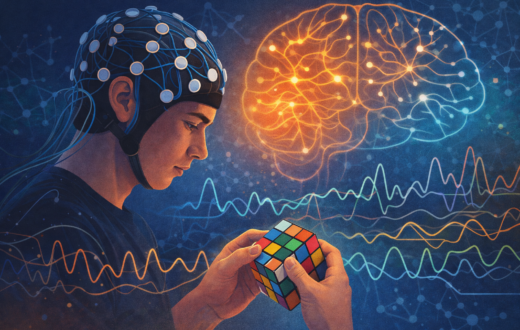
Practical experience in teaching blind and visually impaired children to solve the Rubik’s Cube demonstrates that this puzzle is not merely a recreational activity but an effective instrument for developing cognitive functions and compensatory abilities in learners with special educational needs.
Development of Cognitive Functions
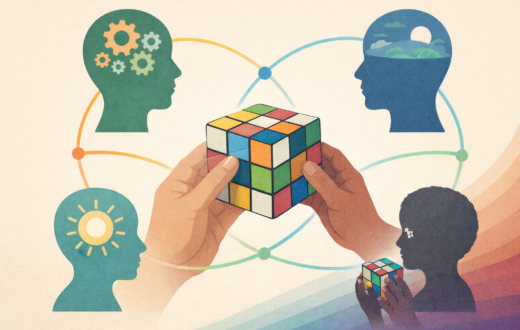
Memory and Algorithmic Thinking. Solving the Rubik’s Cube requires memorization and application of sequential algorithms in a practical activity. Beginners retain approximately eight combinations in memory, while professionals master up to two hundred algorithms. This develops long-term memory through meaningful repetition and facilitates knowledge transfer to new situations.
Spatial Thinking. A four-stage pedagogical methodology—familiarization with elements, study of rotations, solving simple combinations, and application of formulas – contributes to the formation of an adequate mental image of a three-dimensional object. This is particularly significant for blind children: practical experience has demonstrated that they successfully learned to differentiate right-left and up-down orientations, as well as to distinguish clockwise from counterclockwise rotation.
Logical Thinking. Solving the puzzle requires rapid decision-making, analysis of the current situation, and selection of an optimal strategy. This cultivates logical reasoning ability and a creative approach to a problem-solving process.
Compensatory and Adaptive Functions
For children with visual impairment, the Rubik’s Cube possesses particular value as a means of developing micro-spatial orientation. Tactile perception of tactile designations compensates for the absence of visual information and promotes the formation of an adequate mental representation of the object through alternative sensory channels.
Furthermore, regular engagement with the Cube contributes to the reduction of stereotypical movements in children with developmental disorders. Instead of rocking, jumping, or flailing movements, children focus on goal-directed activity, thereby developing voluntary self-regulation of their own behavior.
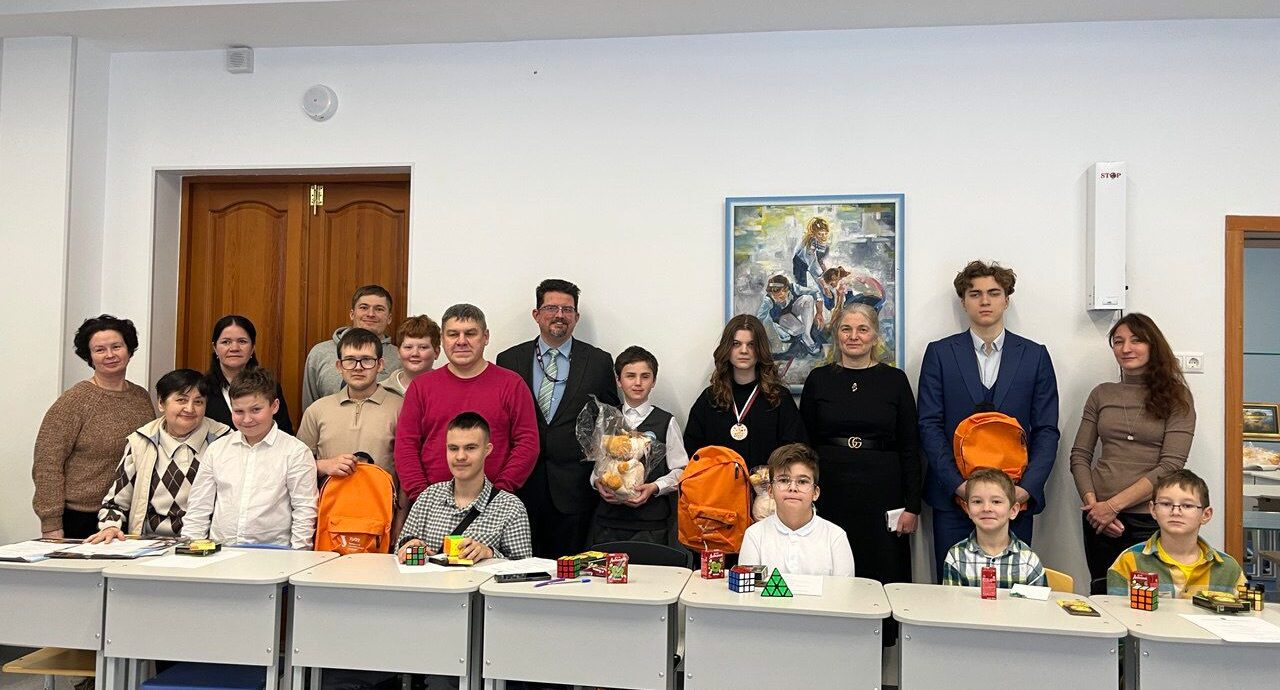
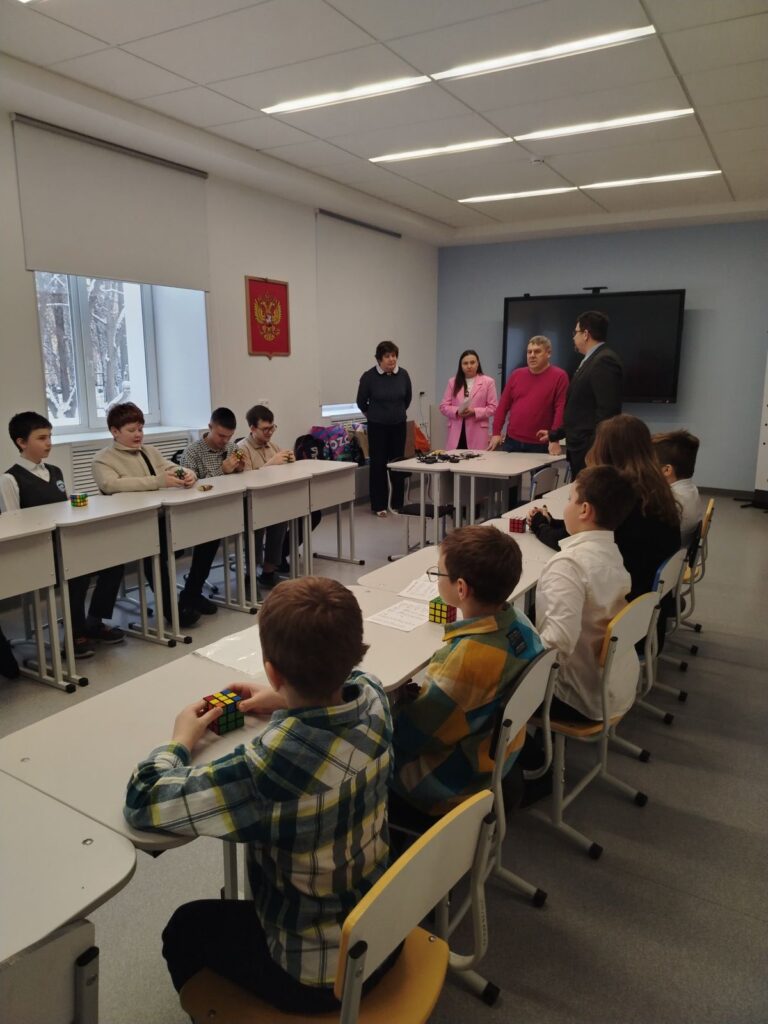
The effectiveness of instruction depends significantly on adherence to principles of gradual progression, degree of individualization of the learning process (instruction utilizing the “hand-in-hand” method), and motivational support. Competitions conducted in 2024 and 2025 at the S.A. Martirosyan Boarding School (Verkhnyaya Pyshma, Sverdlovsk Region) with three designated categories based on difficulty level demonstrated the strong motivational force of competitive elements. Even those students who assembled the Cube with pedagogical assistance participated with genuine interest and derived enjoyment from the process. It is noteworthy that competitions were conducted in strict accordance with speedcubing tournament regulations: under the direction of a certified trainer with rigorous time monitoring. The stringency of competition standards also exerted a particular psychological effect that warrants further research.
The Rubik’s Cube represents an effective instrument for developing memory, spatial and logical thinking, as well as compensatory functions of children with special educational needs. Its successful application in special education confirms the universality of this approach: developmental benefits are achieved regardless of sensory limitations. Through the initiative of the Hungarian Consulate in Ekaterinburg, Russia, competitions for speedcubing among visually impaired and blind children have been implemented since 2024. In 2026, the team plans to expand the number of participating schools and participants, and we, in turn, anticipate further research on this topic.