

Procrastination: How to Stop Putting Life Off Until Tomorrow

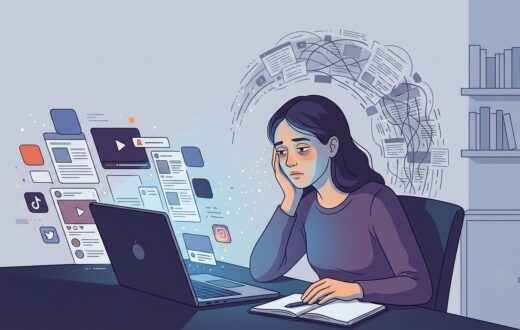
Procrastination is neither laziness nor a character flaw, but a complex psychological phenomenon linked to emotional self-regulation. According to research by Timothy Pychyl of Carleton University, postponing tasks is first and foremost a way to avoid negative feelings: anxiety, fear of failure, boredom, or a sense of meaninglessness. Understanding this mechanism is the first step toward regaining control over one’s own time.
Why Do We Procrastinate?
The human brain is wired to prefer immediate rewards over delayed benefits. The limbic system, which governs emotions, often “overpowers” the prefrontal cortex, which plans long-term goals. This is precisely why we choose a TV series over a report, even while fully aware of the consequences. Chronic procrastination correlates with elevated stress levels, symptoms of depression, and weakened immunity — findings confirmed by the work of psychologist Fuschia Sirois.
Effective Psychological Strategies
The Two-Minute Rule. If a task takes less than two minutes, do it immediately. This technique, proposed by David Allen, breaks the cycle of postponement and creates a sense of productivity that triggers dopamine-based reinforcement.
Task Decomposition. A large goal (“write a dissertation”) paralyzes the brain due to its uncertainty. Break it down into micro-steps: “open the document,” “write one paragraph.” Specificity reduces anxiety and makes it possible to start.
The Pomodoro Technique. Working in 25-minute blocks with short breaks takes advantage of how attention works: the brain more readily agrees to a limited effort than to an endless workload. Over the course of several “pomodoros,” the task advances noticeably.
Self-Compassion Instead of Self-Criticism. Research shows that people who forgive themselves for past episodes of procrastination are less likely to postpone tasks in the future. Self-flagellation, by contrast, intensifies anxiety and triggers a new cycle of avoidance.
Implementation Intentions. The “if–then” formulation (“if it is 9:00 a.m., I will open my work file”) converts intention into an automatic script and reduces the load on executive functions, including volitional control. This method was developed by psychologist Peter Gollwitzer and has proven effective in dozens of studies.
Environmental Management. Remove your smartphone from sight, close unnecessary tabs, and prepare your workspace in advance. Willpower is a finite resource, and it is wiser not to spend it resisting distractions, but to eliminate their source altogether.
When to Seek Professional Help
If task postponement is accompanied by a persistent low mood, loss of interest in life, or panic reactions to deadlines, we may be dealing not with procrastination as such, but with symptoms of an anxiety disorder, depression, or ADHD. In such cases, psychotherapy — primarily cognitive-behavioral therapy — delivers lasting results where self-help techniques prove powerless. It is worth remembering that procrastination is not a verdict, but a signal. Once you hear it, you no longer need to fight yourself — you can negotiate.